Cyberattacks on small businesses have reached alarming levels, with 43% of all incidents now targeting this sector. As we approach 2026, email security for small business is no longer optional but an urgent necessity.
Why are small businesses under attack? Limited IT resources and evolving threats like phishing, business email compromise, and AI-powered scams have made them prime targets. The risks are real, but the solutions are within reach.
This article reveals seven essential tips to strengthen email security for small business. You will discover the latest risks, practical strategies, and expert-backed solutions to protect your organization from today’s most sophisticated cyber threats.
The Rising Threat Landscape: Why Email Security Matters for Small Businesses
Cybercriminals are increasingly setting their sights on small and midsize businesses. With limited IT resources and only 53% allocating any dedicated funds, SMBs face a growing threat. The average cost of a cyberattack now exceeds $2.2 million, and a staggering 60% of SMBs shut down within six months after a major breach. Small businesses are also integral to larger supply chains, making them attractive entry points for attackers. According to recent surveys, 56% of SMB owners mistakenly believe they are unlikely targets, despite mounting evidence to the contrary. For more on the severe consequences of cyberattacks, see Cyberattacks Could Shutter One In Five Small Businesses. These trends make email security for small business a non-negotiable priority.
The Growing Risk for SMBs
Many small businesses underestimate their exposure to email-based threats. Attackers know that SMBs often lack advanced cybersecurity defenses and specialized staff. This vulnerability is amplified by the critical role small businesses play in supply chains, serving as gateways to larger organizations. Recent data shows a significant increase in targeted attacks, with nearly half of all cyberattacks now directed at SMBs. Financial losses are only part of the picture; reputation damage and loss of customer trust can be devastating. The misconception that “it won’t happen to us” leaves many organizations unprepared, making email security for small business an urgent necessity.
Evolving Email-Based Threats in 2026
Threat actors are rapidly adopting advanced tactics to breach SMB defenses. AI-powered phishing and business email compromise (BEC) attacks now use hyper-personalization, deepfakes, and real-time event triggers to bypass traditional filters. Attackers impersonate executives and trusted partners, creating convincing requests for wire transfers or sensitive data. High-profile BEC incidents have led to substantial financial losses and operational disruption. As email remains the primary gateway to business systems, email security for small business must adapt to counter these innovative threats.
Human Error: The Weakest Link
Despite technological advancements, human mistakes remain the top reason for successful breaches. Employees may click on malicious links, download infected attachments, or send sensitive information to the wrong recipient. Research from Forbes and Verizon reveals that 94% of malware is delivered via email, underscoring the critical role of user awareness. Regular training and clear policies reduce the risk of accidental compromise, making employee education a cornerstone of email security for small business.
Regulatory and Compliance Pressures
Regulatory requirements are tightening, with frameworks like NIS2, ISO 27001, and SOC 2 now relevant for SMBs. Non-compliance exposes organizations to fines, legal action, and reputational harm. Industries such as healthcare and finance face especially strict mandates around data protection and reporting. Keeping up with evolving standards is essential for maintaining trust and avoiding costly penalties. For every SMB, aligning with these requirements is a key component of effective email security for small business.
Understanding Common Email Security Threats in 2026
Small businesses today face a rapidly shifting threat landscape. Attackers are deploying sophisticated new tactics to compromise email systems, making email security for small business a critical concern. Understanding the most common and emerging threats is the first step in building effective defenses.
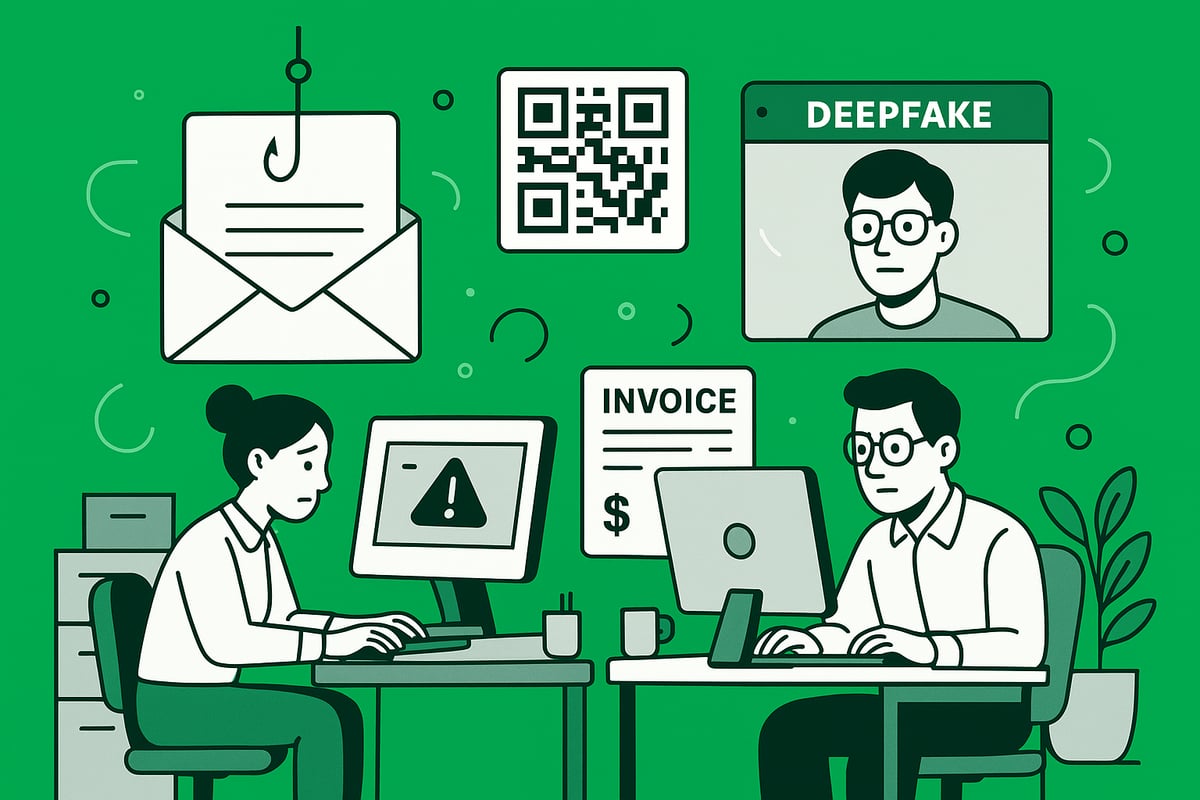
Phishing and Spear Phishing
Phishing remains one of the most prevalent threats to email security for small business. Attackers use deceptive emails to trick recipients into revealing credentials or transferring funds. Spear phishing takes this further, targeting specific individuals with tailored messages.
AI is now supercharging these attacks. Scammers can craft highly convincing emails, mimicking trusted brands or even colleagues. Common examples include fake account verification requests, fraudulent invoice emails, and urgent messages from a supposed CEO.
The risks are significant: a single successful phishing attack can lead to financial loss, data breaches, or even business closure. Small businesses must remain alert and educate staff to recognize these increasingly sophisticated scams.
Business Email Compromise (BEC)
Business Email Compromise, or BEC, is a targeted attack where criminals impersonate executives, suppliers, or trusted partners to manipulate employees. The goal is often to authorize fraudulent wire transfers or disclose sensitive information, putting email security for small business at high risk.
According to the FBI, global BEC losses have exceeded $26 billion since 2016. Notable incidents include the Puerto Rico government losing $2.6 million and Ubiquiti Networks suffering a $46.7 million hit. These cases illustrate how even a single compromised email can have devastating consequences.
BEC attacks are often well-researched and timed, making them hard to detect without proper safeguards and vigilant staff.
Malicious Attachments and URLs
Malicious attachments and deceptive links are classic methods for delivering malware, ransomware, or redirecting users to harmful sites. Attackers now use AI tools to disguise these threats, making them appear legitimate and bypassing basic security filters.
Research shows that 94% of malware is delivered through email, highlighting the urgent need for robust email security for small business. Files may look like invoices or reports, and links may closely mimic trusted domains.
To counter these threats, businesses should implement advanced scanning solutions and teach employees to verify attachments and URLs before clicking.
Emerging Threats: Deepfakes, QR Code Scams, and Real-Time Phishing
In 2026, attackers are leveraging deepfakes to impersonate executives in video or audio messages, adding a new dimension to social engineering. QR code phishing is also on the rise, with scammers embedding malicious codes in emails that lead to spoofed login pages.
AI is enabling real-time, event-driven phishing campaigns that exploit breaking news or current events, making threats harder to spot. Staying informed about these evolving tactics is essential for email security for small business. For ongoing updates and expert insights, the Email security blog and resources offers practical guidance and threat intelligence tailored for SMBs.
Small businesses need advanced detection tools and continuous education to defend against these sophisticated, fast-changing risks.
7 Essential Tips on Email Security for Small Business 2026
The threat landscape is shifting, and protecting your company’s inboxes is non-negotiable. To help, here are seven actionable strategies for robust email security for small business in 2026. These tips combine proven best practices with new approaches tailored for today’s risks.

1. Conduct Regular Phishing Awareness Training
Human error remains the top cause of breaches, making employee education foundational for email security for small business. Ongoing training helps staff spot suspicious messages and avoid falling for phishing tactics.
Key topics to cover include:
- How to identify phishing and spear phishing messages
- Safe handling of links and attachments
- Verifying sender identities, especially for financial requests
Interactive simulations and real-world phishing tests are highly effective. According to recent studies, companies that implement these programs see a marked drop in successful attacks. For example, businesses conducting quarterly training reduced their click rates on malicious links by over 60 percent.
Leadership should champion this initiative, setting clear expectations and fostering a security-first culture. Update training materials regularly to address new threats, such as AI-crafted phishing emails. Encourage employees to report suspicious emails without fear of reprisal.
Continuous learning keeps everyone vigilant and reduces the likelihood of a costly breach. Make security awareness a routine part of onboarding and ongoing employee development.
2. Deploy Multi-Factor Authentication (MFA) Across All Accounts
Passwords alone no longer suffice for email security for small business. Multi-factor authentication (MFA) adds a critical barrier, even if credentials are compromised.
MFA options include:
- SMS text codes
- Authenticator apps like Google Authenticator or Microsoft Authenticator
- Hardware tokens (e.g., YubiKey)
Best practices dictate enabling MFA on all business-critical accounts, not just email. Data shows that MFA can block up to 99.9 percent of automated account attacks. For example, a small retailer avoided a major breach when an attacker failed to bypass MFA after stealing a manager’s password.
Adoption can be a hurdle, so communicate the benefits clearly and provide user-friendly guides. Most modern email platforms, such as Gmail and Outlook, offer seamless MFA integration. Start with high-risk accounts, then expand across your organization.
MFA is a simple, high-impact layer that dramatically strengthens your security posture.
3. Implement Data Loss Prevention (DLP) Tools and Policies
Protecting sensitive data is a cornerstone of email security for small business. Data loss prevention (DLP) tools monitor outgoing messages for confidential information, stopping leaks before they happen.
DLP solutions for SMBs, such as Microsoft DLP or Fortinet FortiMail, can scan emails and attachments for patterns like credit card numbers or health records. If a violation is detected, the system can block the email, alert IT, or require additional authorization.
Regulations like GDPR and HIPAA mandate strong data protection. DLP not only helps with compliance but also reduces incidents of accidental or malicious data loss. Integration with existing email systems is typically straightforward, and customizable policies allow you to tailor protection to your business needs.
Regularly review and update your DLP policies to reflect changes in operations or regulations. DLP is an investment that pays dividends by preventing costly breaches and compliance penalties.
4. Enable Email Encryption and Security Protocols
Encryption ensures that emails are only readable by intended recipients, both in transit and at rest. For optimal email security for small business, implement these essential protocols:
- TLS (Transport Layer Security): Encrypts email data as it moves between servers.
- DKIM (DomainKeys Identified Mail): Authenticates the sender and ensures the message hasn’t been altered.
- SPF (Sender Policy Framework): Prevents spoofing by verifying that incoming mail from a domain comes from authorized servers.
Here’s a sample DNS SPF record configuration:
v=spf1 include:_spf.google.com ~all
Enable these protocols within your email provider’s admin console. Many platforms offer step-by-step guides. Industry standards recommend regular testing to verify correct setup.
Educate users to recognize secure email indicators, such as padlock symbols or “sent via TLS” notices. Encryption and authentication protocols thwart interception, tampering, and spoofing, protecting your business from both data theft and reputational harm.
5. Strengthen Endpoint Security and Network Protections
Securing the devices that access your email is vital for comprehensive email security for small business. Endpoint security tools, such as antivirus and anti-malware software, shield computers and mobile devices from threats.
Key steps include:
- Keep operating systems and applications updated with the latest patches
- Use firewalls to block unauthorized traffic
- Require VPNs for remote access or public Wi-Fi usage
Consider centralized management tools that allow small teams to monitor device security from a single dashboard. For example, a small accounting firm reduced malware incidents by 80 percent after deploying cloud-managed antivirus across all endpoints.
Regular vulnerability assessments and prompt patch management are essential. A layered approach—combining network and endpoint protections—creates multiple barriers for attackers.
For practical solutions tailored to small businesses, review Email security solutions for SMBs to find tools that fit your needs and budget.
6. Separate Business and Personal Email Usage
Mixing business and personal email increases the risk of compromise. For strong email security for small business, enforce clear policies separating these accounts.
Risks of mixing usage include:
- Increased exposure to spear-phishing and social engineering
- Higher chance of accidental data leakage
- Compromised audit trails, making compliance harder
Provide staff with secure, business-only email accounts, and educate them on the dangers of using work email for personal signups or vice versa. Tools like password managers and secure email clients can help manage multiple accounts safely.
Onboarding and offboarding processes should include email account setup and disabling to prevent unauthorized access. Maintaining clean boundaries between personal and work email is a simple step with a significant security payoff.
7. Establish a Clear Incident Response Plan for Email Breaches
No defense is foolproof, so every small business needs a robust incident response plan (IRP) for email-related breaches. This is a vital component of email security for small business.
A strong IRP includes:
- Rapid detection and containment procedures
- Clear communication protocols for staff, clients, and authorities
- A step-by-step recovery checklist
For example, when a regional law firm experienced a phishing breach, their IRP enabled them to identify affected accounts, notify stakeholders, and restore normal operations within 24 hours, minimizing financial and reputational damage.
Test your plan regularly, updating it as new threats emerge. Assign roles and responsibilities so everyone knows what to do in a crisis. Quick, coordinated action can be the difference between a minor incident and a major disaster.
Encourage a culture of transparency, where employees feel comfortable reporting suspicious activity immediately. Regular drills build confidence and ensure your team is always prepared.
Choosing the Right Email Security Tools for Small Business
Selecting the right email security for small business is crucial in 2026. The landscape of threats is evolving rapidly, and small businesses need robust yet manageable solutions. The right tools should balance protection with ease of use, ensuring staff can operate efficiently without being overwhelmed by complexity.
Key Features to Look For in 2026
When evaluating email security for small business, prioritize solutions that offer AI-powered threat detection, real-time scanning, and sender verification. Look for tools with sandboxing capabilities for attachments, which help isolate suspicious files before they reach inboxes.
A user-friendly interface is essential, especially for teams with limited IT support. Cloud-based options provide flexibility and scalability, letting you adjust protection as your business grows. Integration with common platforms like Microsoft 365 and Google Workspace should be seamless. These features collectively form the foundation of strong email security for small business.
| Feature | Benefit |
|---|---|
| AI Threat Detection | Identifies sophisticated phishing |
| Real-Time Scanning | Stops threats before they reach users |
| Sandboxing | Isolates dangerous attachments |
| Sender Verification | Reduces impersonation risk |
| Easy Integration | Minimal IT overhead |
Evaluating Vendors: What Matters Most
Choosing the right vendor for email security for small business involves more than just price. Evaluate detection accuracy and false positive rates, as too many false alerts can disrupt workflow. Privacy protection and compliance support are critical, especially for regulated industries.
Consider the total cost of ownership, including setup and ongoing maintenance. Free solutions may offer basic protection, but premium services often include advanced features and better support. Examine customer reviews and vendor reputation. Comparing vendors directly helps determine which email security for small business aligns with your needs.
Ṣọ Email Security: AI-Powered Protection for SMBs
Ṣọ Email Security delivers enterprise-grade email security for small business, specifically designed for teams without dedicated IT resources. Its core features include real-time AI scanning, sender verification, and thorough link and attachment analysis. The privacy-first design means sensitive data stays secure.
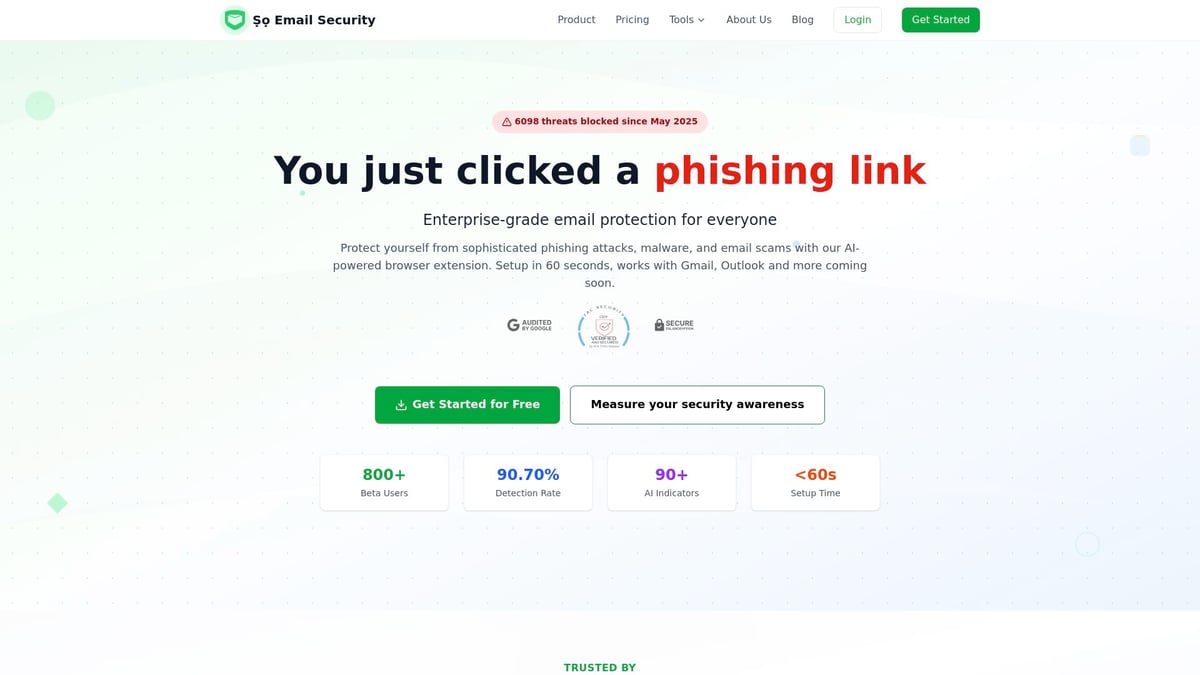
Setup is fast, with a browser extension that takes just 60 seconds. Both free and premium options are available, making it accessible for all budgets. With a detection accuracy of 90.7 percent and high user satisfaction, Ṣọ stands out as a reliable solution. To get started, follow the steps outlined in How to get started with email protection.
Integrating Security Tools into Daily Operations
Integrating email security for small business into daily routines requires planning and training. Onboard staff with clear instructions and regular workshops to ensure everyone understands new tools. Ongoing monitoring and periodic reviews help identify gaps and optimize protection.
Choose solutions that offer regular updates and responsive vendor support. Success stories show that businesses investing in integration and training achieve stronger protection and fewer incidents. Make security tools part of your company’s workflow to maximize the benefits of email security for small business.
Maintaining Compliance and Security Culture in Your Small Business
Establishing a robust security culture is fundamental for effective email security for small business. Without a proactive approach, even the best technical solutions can fall short. Small businesses must weave security and compliance into daily practices, making them second nature to every employee.
Building a Security-First Mindset
Leadership sets the tone for email security for small business by placing cybersecurity at the forefront of company values. When leaders model secure behaviors, such as using strong passwords and reporting suspicious emails, employees are more likely to follow suit.
Regular communication is crucial. Hold short, frequent meetings to discuss new threats and reinforce best practices. Encourage questions and foster an open environment where staff can voice concerns. According to Cyber Attacks on Small Businesses Statistics 2025, businesses with strong security cultures experience fewer incidents and recover faster when attacks occur.
A security-first mindset turns every team member into a line of defense, protecting sensitive data and business reputation.
Regular Audits, Assessments, and Policy Updates
Routine security audits help maintain email security for small business by uncovering vulnerabilities and ensuring compliance with current standards. Schedule assessments quarterly or biannually to review network configurations, email protocols, and user access.
Update security policies frequently. As threats evolve, so must your documentation. Incorporate lessons learned from recent incidents or industry news. Use compliance checklists to guide updates, especially for regulations like GDPR or HIPAA.
External resources, such as the 2025 Cisco Cybersecurity Readiness Index, offer benchmarks and best practices for small businesses aiming to stay ahead of compliance requirements.
Regular reviews not only reduce risk but also demonstrate due diligence to customers and regulators.
Employee Engagement and Accountability
Employee participation is vital for email security for small business. Involve staff in security initiatives through interactive training, open discussions, and feedback sessions.
Recognize and reward employees who exhibit strong security habits. This could be as simple as public praise or small incentives for reporting phishing attempts. Clear reporting channels make it easy for staff to alert IT or leadership about suspicious activity without fear of reprisal.
Consider implementing a simple table to track engagement:
| Initiative | Participation Rate | Recognition Given |
|---|---|---|
| Phishing simulations | 90% | Yes |
| Policy update reviews | 75% | Yes |
Accountability paired with encouragement fosters a culture where everyone feels responsible for protecting business communications.
Staying Ahead of Evolving Threats
Threats targeting email security for small business are constantly changing. Stay informed by subscribing to cybersecurity newsletters, joining industry groups, and monitoring vendor updates.
Encourage staff to share news of emerging scams or vulnerabilities. This collective awareness allows your business to adapt quickly and implement new safeguards as needed.
Proactive measures may include adopting new authentication methods, updating spam filters, and testing response plans. Businesses that anticipate and prepare for change are less likely to suffer major incidents.
By prioritizing ongoing education and vigilance, your small business can maintain strong defenses against even the most sophisticated threats.