In 2026, cybercriminals continue to exploit email as their primary attack route, using advanced phishing and business email compromise to cause billions in losses. Recent breaches and hefty regulatory fines have put organizations on high alert.
The stakes are higher than ever: financial losses, sensitive data leaks, and reputational harm can devastate any business. This guide offers proven strategies to help you build an effective email security policy that protects your organization from evolving threats.
You will discover step-by-step instructions, best practices, and expert insights designed for IT leaders, CISOs, and business owners. By following this blueprint, you can future-proof your email security and maintain compliance, resilience, and peace of mind.
Get ready to learn the fundamentals, assess today’s threat landscape, design a strong policy, enforce it, and stay ahead of tomorrow’s risks.
Understanding Email Security Policies: Definitions and Core Principles
Establishing a strong email security policy is the foundation for protecting your organization from digital threats. In this section, you will learn what an email security policy is, why it is critical for 2026, and the core principles behind effective policy design.
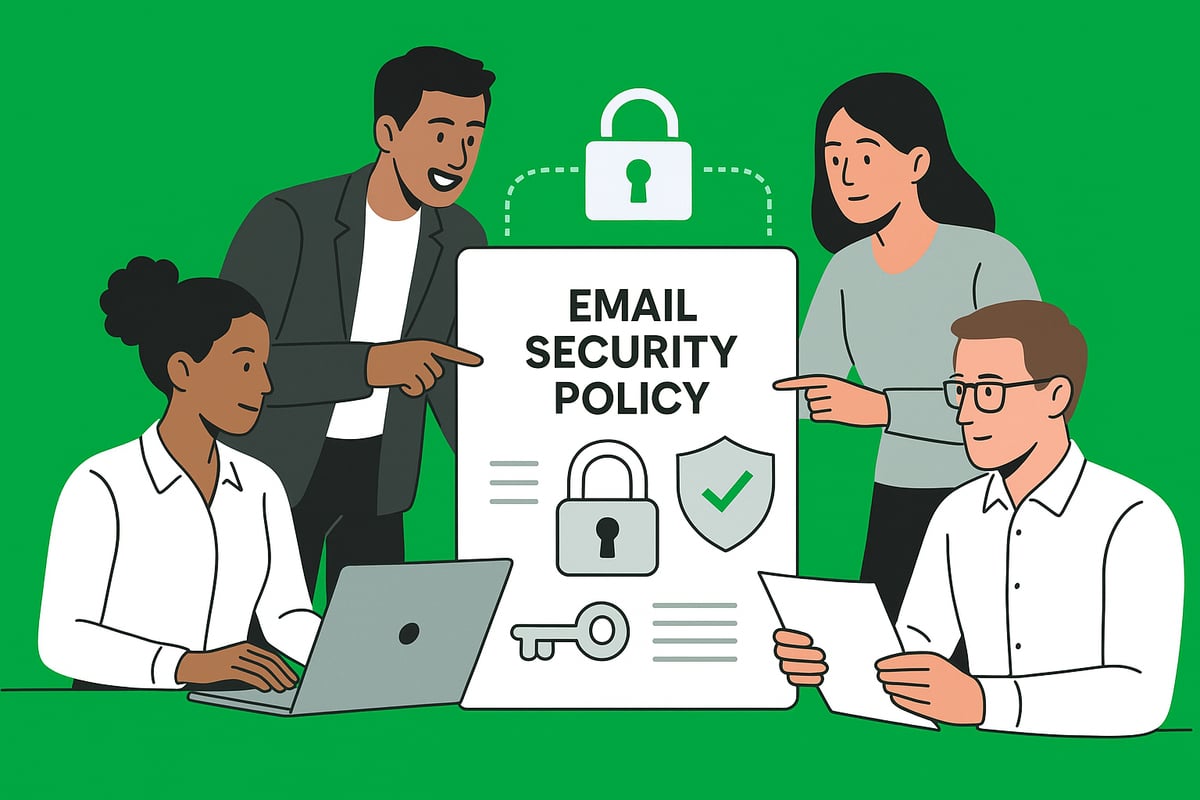
What Is an Email Security Policy?
An email security policy is a formal document that defines the rules, procedures, and responsibilities for using email securely within an organization. Its primary purpose is to safeguard sensitive information, prevent unauthorized access, and maintain compliance with legal and industry standards.
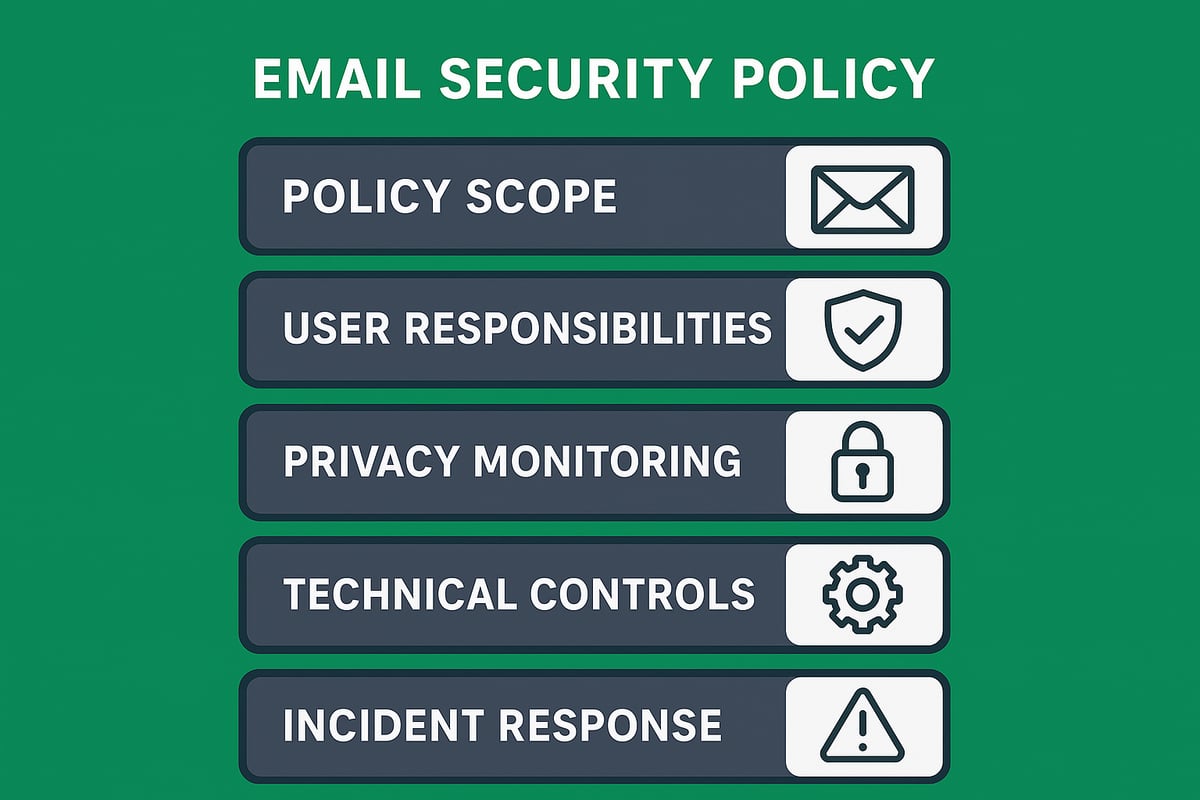
Key elements of an email security policy include acceptable use, confidentiality, monitoring practices, incident response steps, and clear user responsibilities. Unlike general IT or acceptable use policies, an email security policy focuses specifically on email-related threats and safeguards.
| Policy Type | Focus Area | Example Requirement |
|---|---|---|
| Email Security Policy | Email only | Require encryption for confidential messages |
| Acceptable Use Policy | All IT resources | Limit personal use of company devices |
| General IT Security Policy | IT infrastructure | Set password change intervals for all systems |
A well-crafted email security policy might, for instance, require encryption for confidential communications and mandate that all phishing attempts be reported immediately.
Why Every Organization Needs an Email Security Policy in 2026
The need for a comprehensive email security policy has never been greater. Email-based attacks such as phishing, ransomware, and business email compromise are now more targeted and technically advanced. Regulatory requirements, including GDPR, HIPAA, CCPA, and new 2026 standards, demand strict protections for digital communications.
The financial impact of data breaches is staggering, with the average incident costing over $4 million, and email often serving as the initial attack vector. Without a clear email security policy, employees can unintentionally become the weakest link, exposing the organization to insider threats and compliance failures.
Consider the case of a major retailer whose email breach led to millions in losses and regulatory fines. This illustrates why every organization must develop and enforce a robust email security policy to mitigate risk.
Core Principles of Effective Email Security Policies
An effective email security policy is grounded in several core principles:
- Least privilege: Only authorized users should access sensitive email content.
- Data classification: Define and protect categories of data shared via email.
- User authentication: Enforce strong passwords and multifactor authentication.
- Encryption standards: Require encryption for sensitive communications and attachments.
- Monitoring and auditing: Continuously monitor email activity and review logs for suspicious behavior.
- Employee education: Provide regular training and hold users accountable for policy adherence.
- Alignment with cybersecurity framework: Integrate the email security policy with broader organizational security measures.
Continuous improvement is also essential. Regularly review and update the email security policy to address new attack techniques and regulatory changes. For more detailed guidance on implementing these principles, explore Email security best practices to stay informed about evolving threats and practical solutions.
By embedding these principles into your email security policy, your organization strengthens its defense against current and emerging email threats.
The 2026 Email Threat Landscape: Risks and Real-World Examples
In 2026, organizations face an increasingly complex email threat landscape. Cybercriminals continually refine their tactics, targeting businesses of all sizes. A robust email security policy is essential for mitigating these evolving risks and protecting sensitive data.

Modern Email Threats Targeting Organizations
Today’s organizations contend with a wide array of email-based threats. Attackers rely on social engineering, often impersonating trusted contacts to trick users. Phishing and spear-phishing campaigns attempt to extract credentials or deploy malware via malicious links and attachments.
Ransomware is frequently delivered through email, encrypting data and demanding payment. Business Email Compromise (BEC) schemes target finance teams by impersonating executives, aiming to divert funds. Account takeover attacks exploit stolen credentials, enabling lateral movement within networks.
Data exfiltration is another pressing concern, as sensitive information can be sent to unauthorized recipients. Without a well-defined email security policy, organizations are left vulnerable to these persistent threats.
Recent Case Studies and Statistics
Real-world incidents highlight the necessity of a strong email security policy. For example, a major healthcare provider suffered a phishing attack that exposed thousands of patient records, demonstrating the risk to regulated industries. Studies indicate that over 90% of cyberattacks begin with email, emphasizing the need for comprehensive safeguards.
Retailers have faced significant financial losses and regulatory penalties following email breaches. Notably, AI-powered phishing campaigns are now bypassing traditional filters, increasing the likelihood of successful attacks. These developments underscore the urgency of updating your email security policy regularly.
Evolving Attack Techniques in 2026
Attackers are adopting advanced methods to outpace defenses. Deepfake and AI-generated phishing emails now mimic human tone and formatting, making detection challenging. QR code phishing, or “quishing,” targets mobile device users, while supply chain attacks exploit compromised vendors to infiltrate organizations.
Multi-stage attacks are becoming more common, with an initial phishing email leading to malware deployment or BEC schemes. As AI enhances phishing email effectiveness, organizations must ensure their email security policy incorporates advanced detection strategies and continuous staff education to counter these adaptive threats.
The Cost of Inadequate Email Security
The consequences of insufficient email security policy are severe. Financial impacts include direct theft, ransom payments, and costly remediation efforts. Operationally, organizations may experience downtime, productivity loss, and strain on IT resources.
Legal repercussions arise from non-compliance with data protection laws, resulting in fines and mandated corrective actions. Reputational damage can erode customer trust and lead to a lasting competitive disadvantage. Proactively strengthening your email security policy is the most effective way to avoid these costly outcomes.
Essential Components of a Modern Email Security Policy
A comprehensive email security policy is built on several essential components. Each part works together to protect your organization from threats, maintain compliance, and foster a culture of security awareness.
Policy Scope, Purpose, and Ownership
The foundation of an effective email security policy is a clear definition of its scope and purpose. The policy should specify who it applies to, including employees, contractors, and third-party partners. Ownership of email systems and data must be established, making it clear that the organization controls all email communications.
Key objectives include maintaining confidentiality, integrity, and availability of information. Boundaries should be set around personal and business use, ensuring staff understand the limits of acceptable behavior. For instance, your policy might cover both cloud and on-premise platforms, and explicitly prevent using company email for personal business.
A well-defined email security policy encourages accountability and sets the tone for all other policy components.
Acceptable Use, Restrictions, and User Responsibilities
A robust email security policy outlines what is considered acceptable and unacceptable use. Permitted uses may include communicating with clients and colleagues, while prohibited actions might involve sending offensive content or sharing login credentials.
Guidelines should clarify how sensitive information is handled and restrict forwarding company data to personal accounts. User responsibilities are central, such as remaining vigilant for phishing attempts and promptly reporting suspicious emails.
- Employees must verify sender authenticity before responding to requests.
- Sharing passwords or confidential information is strictly forbidden.
- All incidents should be reported immediately.
These measures empower users to act as the first line of defense in your email security policy.
Privacy, Monitoring, and Data Retention
Transparency about privacy and monitoring is vital in any email security policy. Users should know that email may be monitored for compliance and threat detection. The policy must outline how long emails are retained, deletion protocols, and any data loss prevention (DLP) technologies used.
- Monitoring tools scan for sensitive data leaving the organization.
- Data retention schedules define how long emails are stored before deletion.
- Employees are informed about monitoring practices.
For example, DLP solutions can flag outgoing messages containing confidential information, supporting the enforcement of your email security policy while respecting user privacy.
Security Controls and Technical Safeguards
Technical safeguards are the backbone of a modern email security policy. These controls protect against evolving threats and automate enforcement. Essential measures include mandatory multi-factor authentication, encryption for sensitive messages, and real-time threat detection.
- Anti-malware and anti-spam filters scan all inbound and outbound emails.
- Regular patching keeps email systems secure.
- Automated tools block malicious links and attachments.
To further strengthen your defenses, consider integrating AI-powered email protection that analyzes messages in real time and flags suspicious activity, enhancing your email security policy with advanced automation.
Incident Response, Reporting, and Policy Enforcement
A successful email security policy must include clear procedures for responding to incidents. Users should know how to report suspicious emails or policy violations, and understand the consequences of non-compliance.
- Step-by-step reporting instructions are provided to all staff.
- Consequences may include additional training or access restrictions.
- The policy is reviewed and updated regularly to address new threats.
For example, requiring employees to report phishing attempts within one hour ensures rapid response and containment. Continuous review and enforcement make your email security policy a living document that evolves with your organization’s needs.
Step-by-Step Guide: Creating and Implementing an Email Security Policy in 2026
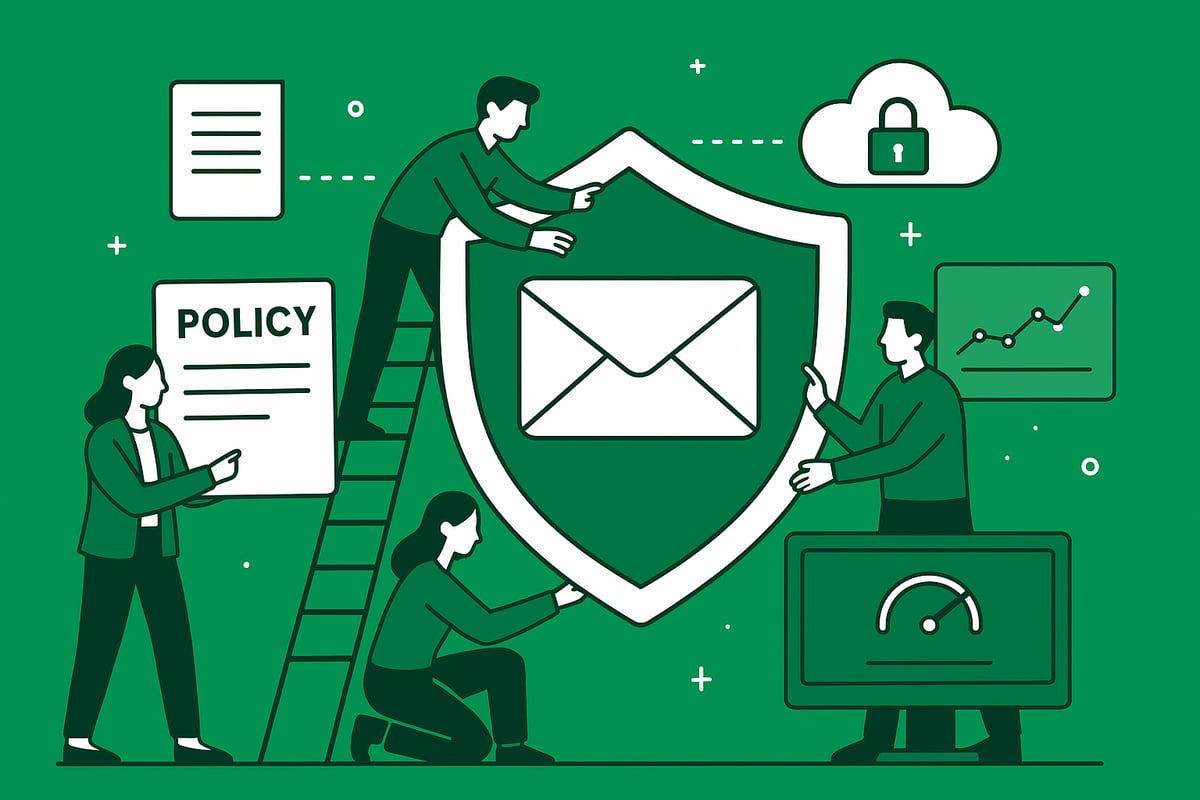
Building a resilient email security policy is a multi-phase process that requires strategic planning, collaboration, and continual improvement. By following these seven steps, organizations can create and enforce a policy that stands up to the ever-evolving email threat landscape.
Step 1: Assess Organizational Needs and Risks
The foundation of a strong email security policy is a clear understanding of your organization’s unique risks and requirements. Begin by conducting a comprehensive risk assessment specifically targeting email threats such as phishing, ransomware, and business email compromise.
- Identify the types of sensitive data handled by your teams.
- Map out key regulatory obligations, including GDPR, HIPAA, and regional 2026 mandates.
- Gather input from IT, legal, HR, and compliance to ensure all angles are covered.
- Benchmark your organization’s current posture against industry standards and leading competitors.
For example, a financial services firm may prioritize encryption of all sensitive communications and enforce strict user access controls. By tailoring your email security policy to your real-world risk profile, you maximize its effectiveness and relevance.
Step 2: Drafting Policy Content and Customization
Once risks are mapped, draft a tailored email security policy that fits your organization’s structure and workflows. Start with a reputable template but customize every section to reflect your business’s unique needs, including remote work, mobile access, and third-party vendor relationships.
- Use clear, direct language that every employee can understand.
- Address department-specific requirements, like sales or marketing teams with high email volume.
- Include guidance for BYOD scenarios and cloud-based email use.
- Seek feedback from diverse staff to ensure policy clarity and practicality.
For instance, a policy that specifically addresses mobile device use and encrypted communication provides actionable guidance for employees. A well-customized email security policy supports both compliance and operational efficiency.
Step 3: Stakeholder Review and Legal Compliance
Before rollout, subject your email security policy to rigorous stakeholder and legal review. Engage legal counsel to verify compliance with all relevant regulations, including GDPR, HIPAA, CCPA, and any new 2026 requirements.
- Involve executive leadership and department heads in the review process.
- Align the policy with existing IT, security, and privacy frameworks.
- Document all feedback, version control, and the final approval process for accountability.
For example, a policy may be updated to address the latest privacy laws or integrate with new data loss prevention measures. Legal review ensures your email security policy is both enforceable and aligned with your organization’s risk tolerance.
Step 4: Policy Communication and User Training
Effective communication and training are critical to gaining buy-in and ensuring compliance with your email security policy. Launch mandatory training sessions for all users, using real-world phishing examples and interactive scenarios.
- Distribute accessible policy documents via the intranet or onboarding materials.
- Require employees to acknowledge their understanding and acceptance in writing.
- Implement quarterly refresher courses and simulated phishing exercises.
- Provide clear instructions on reporting suspicious emails or security incidents.
For example, organizations that regularly update and reinforce training see a significant drop in successful phishing attempts. The more relatable and practical the training, the more likely users will adhere to the email security policy.
Step 5: Technical Implementation and Monitoring
Deploying the right technology is essential for enforcing your email security policy and protecting your organization in real time. Implement layered security solutions such as anti-phishing, data loss prevention (DLP), encryption, and multi-factor authentication.
- Integrate email security tools with SIEM and threat intelligence platforms.
- Configure automated alerts for suspicious activities or policy violations.
- Continuously monitor user behavior and system compliance.
For a practical guide on rolling out these solutions, organizations can get started with email security to ensure best-in-class protection. Technical controls turn policy from theory into daily practice, reducing risk and supporting compliance.
Step 6: Incident Response and Continuous Improvement
No email security policy is complete without a defined incident response plan and commitment to ongoing improvement. Establish clear reporting channels so employees can quickly escalate suspicious emails or policy breaches.
- Outline step-by-step escalation paths for incidents.
- Conduct thorough post-incident reviews and root cause analysis.
- Update policies and controls based on lessons learned from real events.
- Regularly reassess the threat landscape to adapt your strategy.
For example, after a successful simulated phishing test, update your email security policy to address any uncovered gaps. Continuous improvement keeps your defenses sharp against new threats.
Step 7: Policy Review, Audit, and Update Cycle
Sustaining an effective email security policy requires regular review, auditing, and adaptation. Schedule annual or biannual reviews to assess policy relevance and compliance.
- Perform internal and external audits to verify adherence.
- Solicit feedback from users, IT, and leadership for continual refinement.
- Stay informed about emerging threats, technologies, and regulations.
- Update your email security policy promptly after significant security incidents or regulatory changes.
For instance, after major regulatory updates, review your email security policy to ensure ongoing compliance and effectiveness. Regular audits and feedback loops help maintain your organization’s resilience and reputation.
Enforcing and Maintaining Your Email Security Policy
Maintaining a robust email security policy is essential for long-term organizational resilience. Effective enforcement ensures that your policies are not just documents, but living practices that adapt to new threats and foster a culture of vigilance. Below, we detail practical steps to keep your email security policy effective and future-ready.
Ensuring User Adherence and Accountability
User engagement is the cornerstone of a successful email security policy. Begin with comprehensive onboarding that covers policy essentials, followed by regular refresher training to reinforce key concepts. Phishing simulations and targeted awareness campaigns help users recognize evolving threats in real scenarios.
- Conduct mandatory training during onboarding and at set intervals
- Use real-world phishing simulations to test awareness
- Maintain clear documentation of potential disciplinary actions
Empower employees to report suspicious emails without fear of negative consequences. For example, organizations that consistently train and support users have reduced successful phishing attempts by 60 percent. Ongoing accountability ensures your email security policy is respected and followed by everyone.
Monitoring, Auditing, and Compliance Verification
Continuous oversight is vital to identify gaps and enforce your email security policy. Automated monitoring tools can block risky actions, such as external data forwarding, and flag suspicious behavior for investigation. Regular audits, both internal and external, measure policy effectiveness and uncover areas for improvement.
- Deploy automated tools for real-time monitoring
- Schedule periodic audits with documented outcomes
- Integrate policy checks into compliance programs
Given that malicious URLs surpass email attachments as top malware threat, your monitoring strategy must evolve to address these shifting tactics. Data Loss Prevention solutions can alert you to unauthorized transfers, helping ensure your email security policy stays aligned with the latest threats.
Responding to Violations and Security Incidents
Prompt response to incidents is crucial for minimizing impact. Establish clear procedures for reporting, investigating, and resolving violations of your email security policy. A structured approach ensures consistent handling of every event.
- Investigate all reported incidents immediately
- Follow a defined response cycle: containment, eradication, recovery, communication
- Conduct root cause analysis for each incident
Transparent reporting to stakeholders and regulatory bodies builds trust and demonstrates accountability. When a business quickly detects and addresses Business Email Compromise, it can significantly limit financial and reputational damage. Every incident should inform policy updates and user training.
Policy Adaptation: Keeping Pace with Threats and Technology
Your email security policy must remain agile as threats and technologies evolve. Schedule regular reviews to update controls and processes in response to new risks. Solicit feedback from employees and security teams to identify practical gaps.
- Review and revise policy after major incidents or regulatory changes
- Incorporate new detection technologies and user guidance
- Align with trusted solutions, such as those outlined in About Ṣọ Email Security
Early adoption of advanced protections, like AI-driven phishing detection, prepares your organization for emerging challenges. Regular adaptation ensures your email security policy continues to meet business needs and compliance standards.
Future Trends: The Evolution of Email Security Policy Beyond 2026
As organizations look ahead, the evolution of email security policy will be shaped by rapid advances in technology, complex regulatory landscapes, and ever-shifting cyber threats. Staying proactive is essential for resilience and compliance.
AI and Automation in Email Security
Artificial intelligence is transforming how organizations approach their email security policy. AI-driven solutions can detect sophisticated phishing attacks, identify malicious attachments, and adapt to new threat patterns in real time.
For example, AI can analyze behavioral patterns to spot anomalies that signal credential theft, a threat that has surged by 160% in recent years, as noted in Credential theft incidents surge by 160% in 2025. Automated enforcement of authentication, policy rules, and incident response helps reduce human error and limits exposure to evolving risks.
Organizations adopting AI benefit from:
- Real-time threat detection and automated response
- Dynamic policy adjustments based on emerging threats
- Automated user coaching to reinforce safe behaviors
AI is now a cornerstone of any modern email security policy.
Integration with Broader Cybersecurity Ecosystems
The future of email security policy lies in seamless integration with the broader cybersecurity ecosystem. Email is no longer an isolated channel—effective protection requires coordination across endpoints, cloud platforms, and applications.
Zero trust architectures and Extended Detection and Response (XDR) platforms are now incorporating email as a critical component. Cross-channel threat intelligence enables organizations to block coordinated attacks, whether they emerge from email, cloud apps, or endpoints.
As the healthcare industry has learned from recent incidents, vulnerabilities in cloud-based platforms like Microsoft 365 can expose sensitive data, as seen in Healthcare email breaches linked to Microsoft 365 vulnerabilities. Integrating email security policy with overall IT security posture is no longer optional but a necessity for resilience.
Regulatory and Compliance Outlook
The regulatory landscape for email security policy is growing more complex and dynamic. New data protection laws are emerging worldwide, introducing stricter requirements for breach notification, data residency, and user privacy.
Organizations must ensure their email security policy remains adaptive, capable of addressing both current standards and future mandates. This includes:
- Real-time breach detection and reporting
- Enhanced data classification and retention controls
- Ongoing policy reviews to align with legal changes
Failing to keep pace with compliance can result in significant financial penalties and reputational harm.
Preparing for the Next Generation of Email Threats
Looking beyond 2026, organizations must treat their email security policy as a living document. The next generation of threats will demand continuous education, rapid adaptation, and investment in advanced security solutions.
Key steps include:
- Regular training to keep users aware of emerging tactics
- Policy updates in response to new technologies and risks
- Early adoption of innovations like quantum-resistant encryption
Those who prioritize agility and proactive defense will gain a decisive advantage in protecting their communications.